Forex Swing Trading: The Complete Guide for 2026
Swing trading forex means holding positions for 2–10 days to capture multi-day price moves. Learn the required setups, session considerations, position sizing, and the daily routine that makes swing trading sustainable.
Swing trading is the style that best fits most people’s real-world constraints. It doesn’t require you to be in front of a screen all day. Positions are held for 2–10 days, capturing multi-day directional moves. A thorough setup review takes 30–45 minutes per day, and trades manage themselves between those check-ins.
For this reason, swing trading is where most serious retail traders find their sustainable rhythm — after the initial attraction to day trading fades and the impracticality of scalping becomes clear.
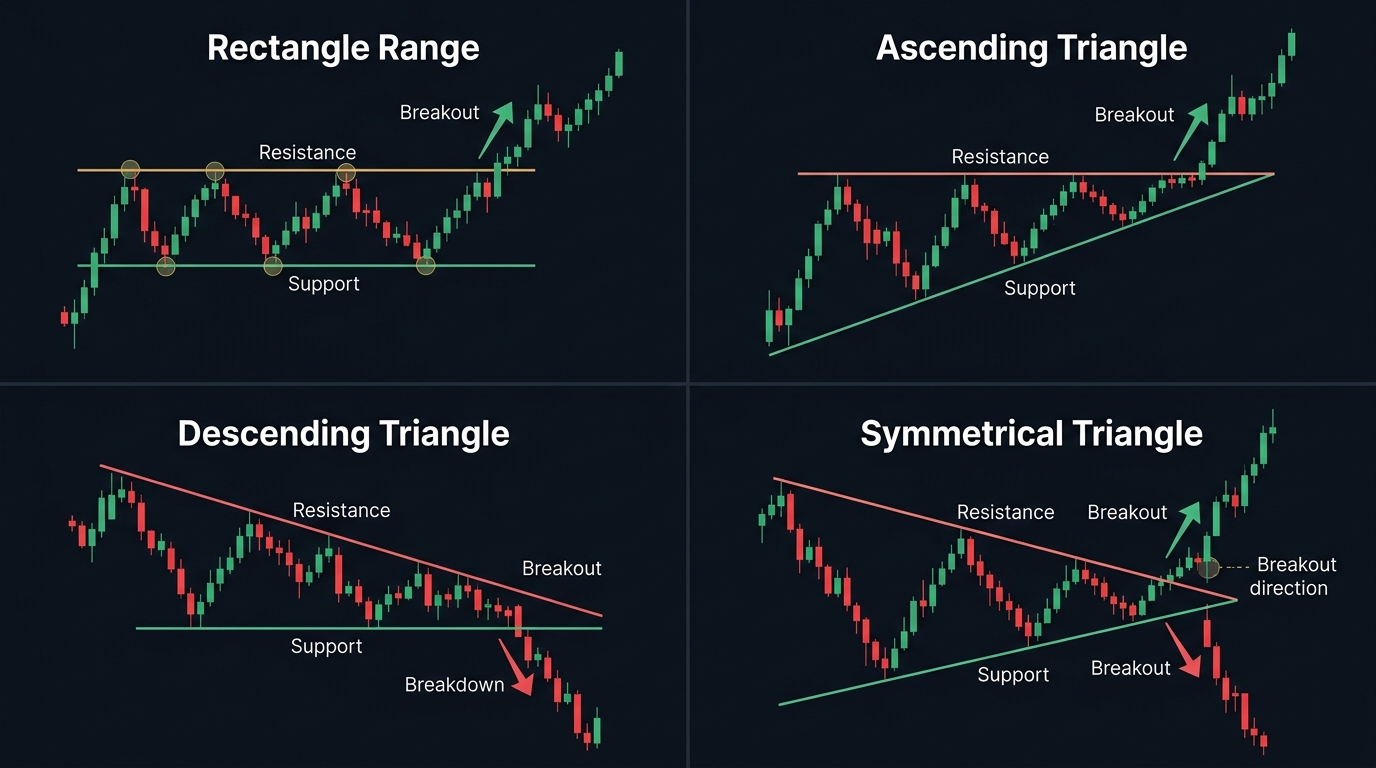
What Swing Trading Is
Time horizon: Positions held 2–10 trading days.
Primary chart timeframe: 4H for entry timing, Daily for trend direction.
Target per trade: 50–300 pips, depending on the pair, the setup, and the prevailing volatility (ATR-based).
Trades per week: 1–5 new setups (fewer in low-volatility conditions; more in clearly trending markets).
The core opportunity: Trending markets create directional moves that last days to weeks. Technical pullbacks within those trends create entry points. Swing trading captures the move from the pullback entry to the next swing high (in an uptrend).
Required Market Conditions
Swing trading works best in trending markets. The critical pre-trade check:
| Condition | Requirement | How to Verify |
|---|---|---|
| Trend direction | Clear daily trend (uptrend: higher highs and higher lows) | Daily chart: price structure + 50 SMA slope |
| Trend strength | ADX above 25 on daily chart | ADX indicator |
| Pair selection | Pairs with highest current trend clarity | Check 3–5 major pairs; select strongest trend |
| News filter | No major events in the next 12–24 hours for the pair’s currencies | Economic calendar review |
| Time filter | Enter during London or NY session (not at weekend open) | Time of entry |
Swing trading in a ranging market produces consistent losses. The daily ADX filter is non-negotiable.
Typical Swing Trade Setup
Using EUR/USD 4H chart as example:
-
Identify daily trend: EUR/USD uptrend on daily chart. Price above 50 SMA daily. ADX(14) daily = 30 (strong trend).
-
Wait for pullback: Price pulls back from recent swing high toward the 50 EMA on the 4H chart.
-
Wait for entry signal: A bullish rejection candle forms at or near the 50 EMA (or the previous swing high level that now acts as support).
-
Enter: Long at next 4H candle open.
-
Stop-loss: Below the pullback low, 15–20 pips beyond the candle’s lowest wick.
-
Take-profit: At the previous swing high on the daily chart, or a Fibonacci extension level.
Trade duration: Typically 3–7 days. The position sits as the market continues its trend after the pullback.
Position Sizing for Swing Trades
Swing trades use wider stops than day trades (because they need to accommodate larger price swings over multiple days). Position sizing must reflect this:
Example:
- Account: $5,000
- Risk: 1% = $50
- Stop-loss: 55 pips (based on chart structure)
- EUR/USD pip value (1 standard lot): $10
Position Size = $50 / (55 × $10) = 0.09 lotsTypical stop-loss ranges by pair for swing trades:
| Pair | Typical Stop Range | Typical Target Range |
|---|---|---|
| EUR/USD | 40–80 pips | 80–200 pips |
| GBP/USD | 50–100 pips | 100–250 pips |
| USD/JPY | 40–90 pips | 80–200 pips |
| AUD/USD | 35–70 pips | 70–160 pips |
| GBP/JPY | 80–150 pips | 160–350 pips |
Use the position size calculator for precise lot sizes.
The Swing Trader’s Daily Routine
Swing trading doesn’t require constant monitoring. A structured routine covers the essential checks:
Morning (30–45 minutes):
- Check all open positions: still valid? Stop-losses need adjustment?
- Review the economic calendar for the day and tomorrow
- Scan 4–5 pairs for new setups meeting all criteria
- Place any new orders (limit or market)
Mid-session check (10 minutes, optional):
- Verify open positions haven’t been stopped out by a news spike
- Note any significant price moves that affect trade management
Evening close (15 minutes):
- Update the trading journal for any trades closed today
- Note any setups forming that may trigger tomorrow
- Check forward calendar for next 48 hours
This routine requires approximately 60–75 minutes per trading day. The rest of the time, the trades are running on their own with pre-set stop-losses and take-profits.
Trade Management During an Open Position
The most important rule: don’t interfere unnecessarily.
A common mistake is checking the position every 30 minutes and adjusting the stop, moving the take-profit, or closing early because price paused briefly. Swing trading works precisely because it gives trades room to breathe.
Legitimate reasons to manage an open trade:
- Move stop to breakeven after the trade moves 1× risk in your favor
- Trail the stop to protect profits as the trend extends (use the most recent swing low)
- Close early if a significant fundamental change occurs (unexpected central bank statement, geopolitical shock) that directly contradicts your trade thesis
Not legitimate reasons to close early:
- “The market looks uncertain right now” (no structural change)
- “I’d rather take the partial profit than risk it reversing” (defeats the RR expectation built into the system)
- “I need the capital for another trade” (use proper position sizing from the start)
Overnight and Weekend Considerations
Since swing trades are held overnight and often over weekends, manage these risks:
Overnight swaps: Forex positions held overnight incur a swap fee (or receive a swap credit) based on the interest rate differential. For most major pairs, swaps are a minor factor over 5–10 day trades. However, check swap rates for the specific pair before entering — particularly for high-carry pairs (e.g., USD/JPY or AUD/JPY where rates differ significantly).
Weekend gap risk: Forex markets close Friday at 17:00 EST and reopen Sunday at 17:00 EST (approximately). Weekend news events can cause gaps at the open. Two approaches:
- Reduce position size by 50% before the weekend if holding through it
- Close the position before Friday close if a major geopolitical or economic risk event is likely over the weekend
For most routine swing trades, holding through the weekend is acceptable if the stop-loss is properly placed and the position size is appropriate.
Swing Trading vs. Day Trading vs. Position Trading
| Factor | Swing Trading | Day Trading | Position Trading |
|---|---|---|---|
| Hold time | 2–10 days | <1 day | Weeks to months |
| Timeframe | 4H, Daily | 15M, 1H | Daily, Weekly |
| Time per day | 30–60 min | 2–4 hours | 15–30 min |
| Stress level | Moderate | Higher | Lower |
| Target pips | 80–250 | 20–80 | 300–2000+ |
| Capital needed | $1,000+ | $2,000+ | $5,000+ |
For most traders starting out, swing trading is the recommended style. It requires meaningful learning and discipline, but not the intense screen time, ultra-fast decisions, or large capital that the other styles demand in their effective forms.
Key Takeaways
- Swing trading holds positions 2–10 days on the 4H/Daily chart, targeting 80–250 pips in trending conditions
- Trending market conditions are mandatory: use daily ADX above 25 and clear higher-high/higher-low structure before entering
- The swing trader’s daily routine requires 60–75 minutes; the rest is managed automatically with pre-set stops and targets
- Don’t interfere with open positions without a legitimate structural reason — premature exits are the most common source of underperformance vs. system expectancy
- Manage overnight and weekend risk with appropriate stop-loss placement and (optionally) reduced size before weekends with high event risk
- Swing trading is recommended as the starting point for most traders before advancing to day trading or high-frequency styles
Next: Position Trading | Follow a Working Routine
Related strategies: EMA Crossover and ADX | Support and Resistance
Tools: Position Size Calculator

Ready to Practice This Strategy?
Test what you learned on a free, risk-free demo account before risking real money.