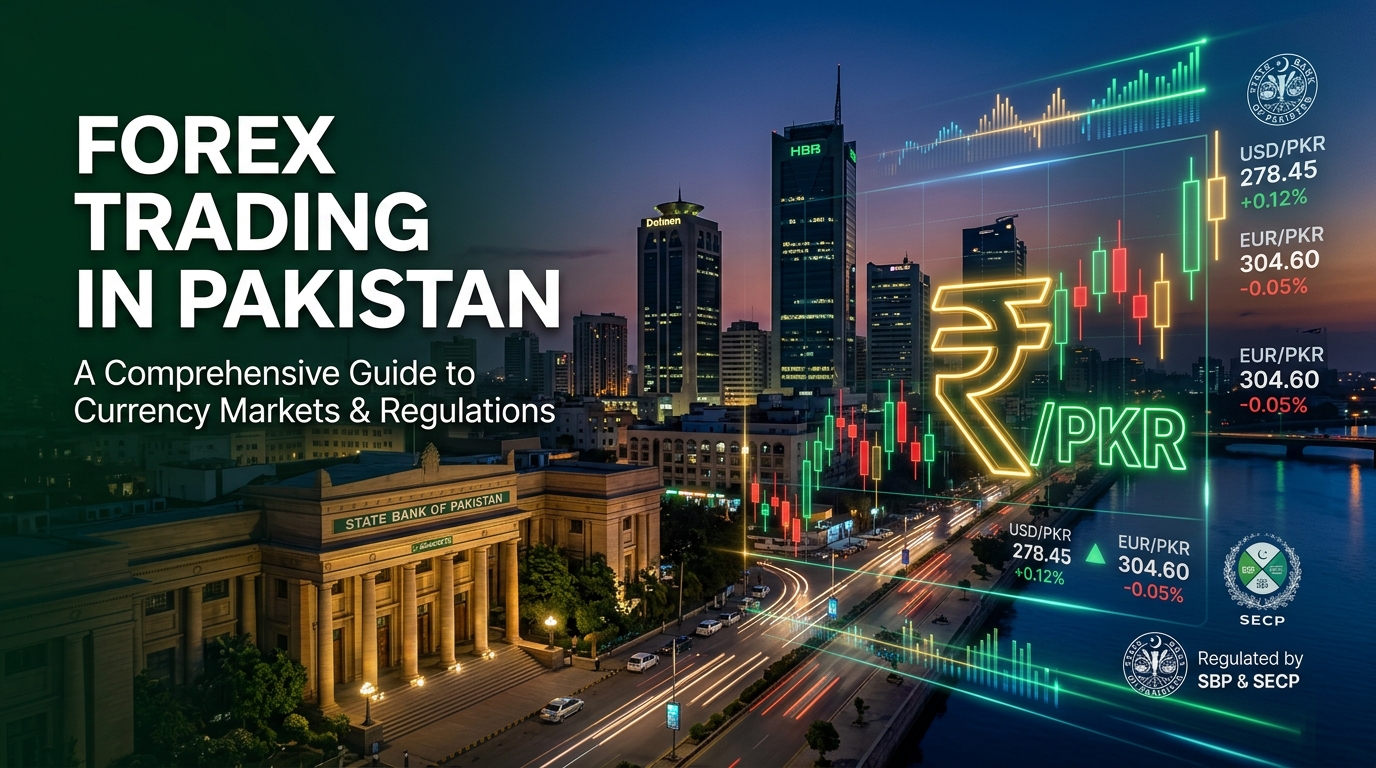
Forex Trading in Pakistan — Legal Status and Regulation
Pakistan does not have a dedicated regulatory framework for retail online forex trading. The Securities and Exchange Commission of Pakistan (SECP) oversees capital markets and licensed securities brokers, while the State Bank of Pakistan (SBP) manages foreign exchange controls under the Foreign Exchange Regulation Act (FERA). Neither body licenses international retail forex platforms.
Pakistani traders access the global forex market through internationally regulated offshore brokers. This sits in a regulatory grey area — neither explicitly illegal nor formally licensed domestically. In practice, millions of Pakistanis trade forex through platforms like Exness, XM, and AvaTrade. The legal risk lies not in trading itself but in choosing platforms without credible international oversight.
SBP Foreign Exchange Controls
The SBP has periodically applied restrictions on foreign currency transfers, particularly during PKR depreciation cycles. This creates practical challenges for funding and withdrawing:
- Bank wire in PKR to USD-denominated accounts can involve unfavorable conversion rates and documentation requirements
- Cryptocurrency deposits (USDT via Binance or similar) have become the most frictionless route for many Pakistani traders, bypassing bank transfer friction
- Local e-wallets — JazzCash and Easypaisa support some brokers for smaller deposit amounts
When the SBP tightens forex controls, as it has during PKR depreciation episodes, bank-based funding becomes more difficult. Cryptocurrency provides a workaround, though it carries its own custody and conversion risks.
Why USD/PKR Volatility Drives Forex Interest
The Pakistani rupee has lost a significant portion of its value against the US dollar since 2018. This economic reality drives many Pakistanis toward forex trading as a means to earn in hard currency or hedge against PKR erosion. USD/PKR, gold, and EUR/USD are the most commonly traded instruments among Pakistani retail traders.
Choosing a Safe Broker from Pakistan
With no domestic regulation and a high volume of fraudulent platforms targeting Pakistani audiences through WhatsApp and social media, the key safeguards are:
- Verify the license number directly on the FCA, CySEC, or ASIC official register
- Avoid brokers registered only in Seychelles, St. Vincent, Vanuatu, or Belize without a tier-1 co-license
- Test withdrawals with small amounts before funding significantly
- Use a demo account for at least two to four weeks before risking real capital
- Ignore guaranteed return promises — they indicate fraud universally