Forex Position Trading: How to Trade Major Multi-Week Trends
Position trading holds forex trades for weeks to months, targeting large macro-driven moves. Learn the fundamental and technical framework, the ideal pairs, and the capital and patience requirements for this long-horizon style.
Position trading is forex trading at its most strategic. Positions are held for weeks, months, or occasionally quarters — capturing major macro-driven currency moves rather than intraday or multi-day technical setups. It’s the style closest to how institutional investors and currency fund managers operate.
The commitment is different: fewer decisions, longer waiting periods, larger stops, and the need to hold through significant drawdowns while the macro thesis plays out. In exchange, successful position trades can produce 500–2,000+ pip moves with relatively few hours spent managing the trade.
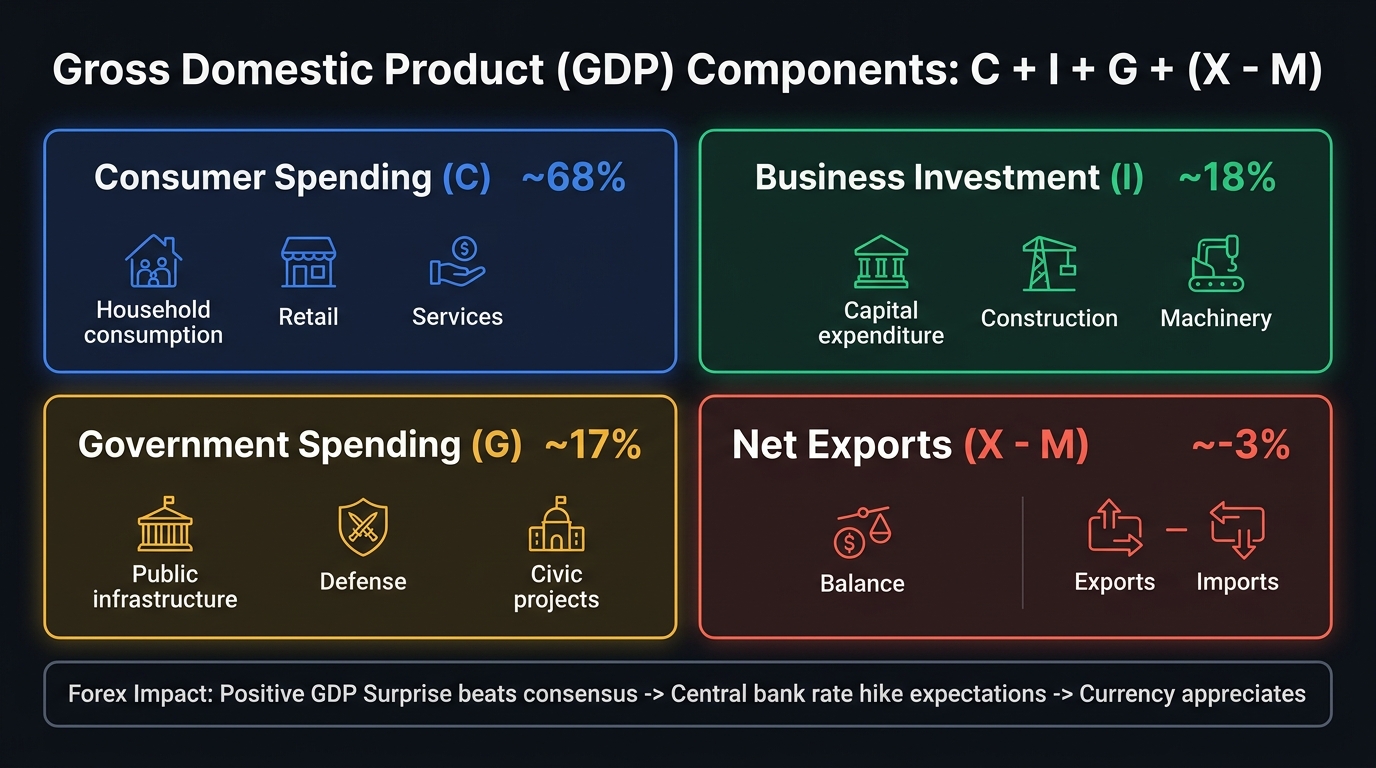
What Position Trading Requires
Position trading demands more from a trader’s understanding of fundamentals and patience than any other style:
1. Fundamental thesis: You need a reason why a currency should appreciate or depreciate over weeks to months. This comes from macroeconomics: interest rate differentials, economic divergence between countries, central bank policy direction, trade flows, and geopolitical developments.
2. Technical timing: Even with a strong fundamental thesis, entering at the wrong price on the daily or weekly chart can result in a significant drawdown before the thesis plays out. Technical analysis provides the entry timing.
3. Patience and psychological tolerance: A position trade may move significantly against you for 1–3 weeks before resolving in your favor. This requires confidence in the thesis and a stop-loss wide enough to accommodate normal retracements without triggering.
4. Capital: Wide stops (100–400 pips for major pairs on the daily chart) combined with 1% risk per trade requires meaningful account size to maintain a tradeable position size.
The Analytical Framework
Step 1: Identify the Macro Thesis
What economic conditions favor one currency over another?
- Interest rate differential: The country with higher (or rising) rates attracts capital. The currency strengthens against currencies with lower (or falling) rates. This is the carry trade mechanism.
- Economic divergence: If US economic data is consistently beating expectations while EU data is missing, EUR/USD likely trends downward as the Fed stays hawkish and the ECB considers cuts.
- Central bank posture: A central bank explicitly signaling rate hikes over multiple meetings creates multi-month directional pressure on the currency.
- Risk sentiment: In sustained risk-off environments (global growth concerns, financial instability), JPY and CHF typically strengthen; commodity currencies (AUD, NZD, CAD) weaken.
Example thesis (hypothetical 2026): “EUR/USD should decline over the next 2–3 months because the ECB is in a cutting cycle while the Fed remains on hold. The rate differential is widening in USD’s favor. Recent EU PMI data has been below 50 (contraction territory) for 3 consecutive months, while US PMI has been above 52. The fundamental case for EUR weakness is strong.”
Step 2: Wait for Technical Alignment
With the macro thesis established (short EUR/USD), look for technical entry signals on the daily or weekly chart:
- Price approaching a key resistance level (a ceiling where the rally may stall)
- Daily chart showing bearish reversal pattern at that resistance (e.g., bearish engulfing, evening star)
- Weekly RSI in overbought territory after a sustained correction upward
- All trend indicators (200 SMA, 50 SMA) pointing downward
When the fundamental thesis and technical entry signal align, the probability of a sustained move in the intended direction is highest.
Pairs Best Suited for Position Trading
| Pair | Why It Suits Position Trading |
|---|---|
| EUR/USD | Most liquid; major macro drivers; deep fundamental research available |
| USD/JPY | BoJ policy divergence; carry trade dynamics; multi-month trends common |
| GBP/USD | Strong trend behavior; clear fundamental catalysts |
| USD/CHF | SNB policy; safe-haven flows; multi-week trends in risk events |
| AUD/USD | Commodity exposure; China growth correlation; clear macro themes |
Exotic pairs (USD/ZAR, USD/TRY, etc.) can produce large moves but carry unpredictable political risks and wide spreads — they’re not suitable for position trading in most retail accounts.
Stop-Loss and Position Sizing
Position trading requires the widest stops of any retail forex style:
Typical stop ranges (daily chart):
| Pair | Typical Stop (Daily Swing) |
|---|---|
| EUR/USD | 100–250 pips |
| GBP/USD | 130–300 pips |
| USD/JPY | 100–250 pips |
| AUD/USD | 80–180 pips |
Position sizing with a 200-pip stop at 1% risk:
- Account: $10,000
- Risk: 1% = $100
- Stop-loss: 200 pips on EUR/USD
- Pip value (1 standard lot): $10
Position Size = $100 / (200 × $10) = 0.05 lotsThis is 5 micro lots — a very small position on a $10,000 account. This is intentional. Position trading with correct risk management requires larger accounts to maintain meaningful notional exposure.
Minimum account size for position trading: $5,000–$10,000 to maintain position sizes above 0.01 lots at 1% risk with typical stops.
Trade Management Over Weeks
Once in a position trade, management is minimal but critical:
Weekly review (every Sunday or Monday):
- Is the macro thesis still intact? (Check: new central bank statements, major data releases, geopolitical shifts)
- Is the technical structure still supportive?
- Has any new information significantly changed the case?
If thesis intact: Hold. Adjust stop-loss only to trail (moving to protect profits, never widening).
If thesis changes significantly: Consider partial or full exit. Don’t hold a position purely from sunk-cost bias — the original thesis was the reason for the trade. If it no longer applies, the trade no longer has a logical basis.
Trailing the stop: As the trade moves in your favor, trail the stop to the most recent significant swing low (for long trades). On the daily chart, this means moving the stop below each new higher low as they form.
Realistic Return and Risk Profile
| Metric | Position Trader (well-executed) |
|---|---|
| Trades per year | 8–20 |
| Average holding time | 3–8 weeks |
| Average win | 300–800 pips |
| Average loss | 150–250 pips (stop hit before thesis plays out) |
| Win rate | 40–55% (lower frequency; higher stake per trade) |
| Annual return | 8–15% |
| Time per week | 3–5 hours (mostly research and weekly review) |
The annual return is similar to swing trading, but the time commitment is much lower. The tradeoff: larger capital requirements and the psychological challenge of holding through multi-week drawdowns.
Position Trading vs. Swing Trading
| Factor | Position Trading | Swing Trading |
|---|---|---|
| Hold time | Weeks to months | 2–10 days |
| Analysis type | Primarily fundamental + weekly chart | Primarily technical + 4H chart |
| Trades per year | 8–20 | 50–150 |
| Stop-loss size | 100–300+ pips | 40–100 pips |
| Capital required | $5,000–$10,000+ | $1,000–$2,500+ |
| Time commitment | 3–5 hours/week | 5–7 hours/week |
Key Takeaways
- Position trading holds trades for weeks to months targeting major macro-driven currency moves
- Requires a fundamental thesis (interest rates, economic divergence, central bank posture) combined with technical entry timing
- EUR/USD, USD/JPY, and GBP/USD are the most suitable pairs for position trading due to deep fundamental research and strong trend behavior
- Typical stops are 100–300 pips on the daily chart; minimum account of $5,000–$10,000 is needed to maintain meaningful position sizes at 1% risk
- Management is weekly: verify the macro thesis remains intact, trail stops to protect profits, exit early only if the fundamental case has materially changed
- Position trading offers similar returns to swing trading with less time commitment — the tradeoff is larger capital requirements and tolerance for multi-week drawdowns
Next: Follow a Working Routine
Related lessons: Fundamental Analysis Introduction | Interest Rates and Forex
Related strategies: Carry Trade | News Trading

Ready to Practice This Strategy?
Test what you learned on a free, risk-free demo account before risking real money.