AFT
AFT stands for After-Hours Trading, an electronic secondary market session occurring after the official exchange close that allows market participants to trade securities in response to late-breaking earnings and macro news.
What Does AFT Stand For in Trading?
In securities trading and capital markets, AFT stands for After-Hours Trading. It designates the electronic trading session that takes place immediately following the regular market closing bell of major exchanges such as the New York Stock Exchange (NYSE) and Nasdaq. On US equity markets, regular trading concludes at 4:00 PM Eastern Time (ET), at which point the after-hours trading session commences, continuing until 8:00 PM ET.
AFT enables institutional asset managers, hedge funds, and self-directed retail traders to execute transactions outside standard exchange hours. This capability is critical because the vast majority of corporate earnings reports, geopolitical announcements, executive departures, and macroeconomic revisions occur either before the morning opening cross or after the afternoon closing cross to prevent disorderly trading during the primary session.
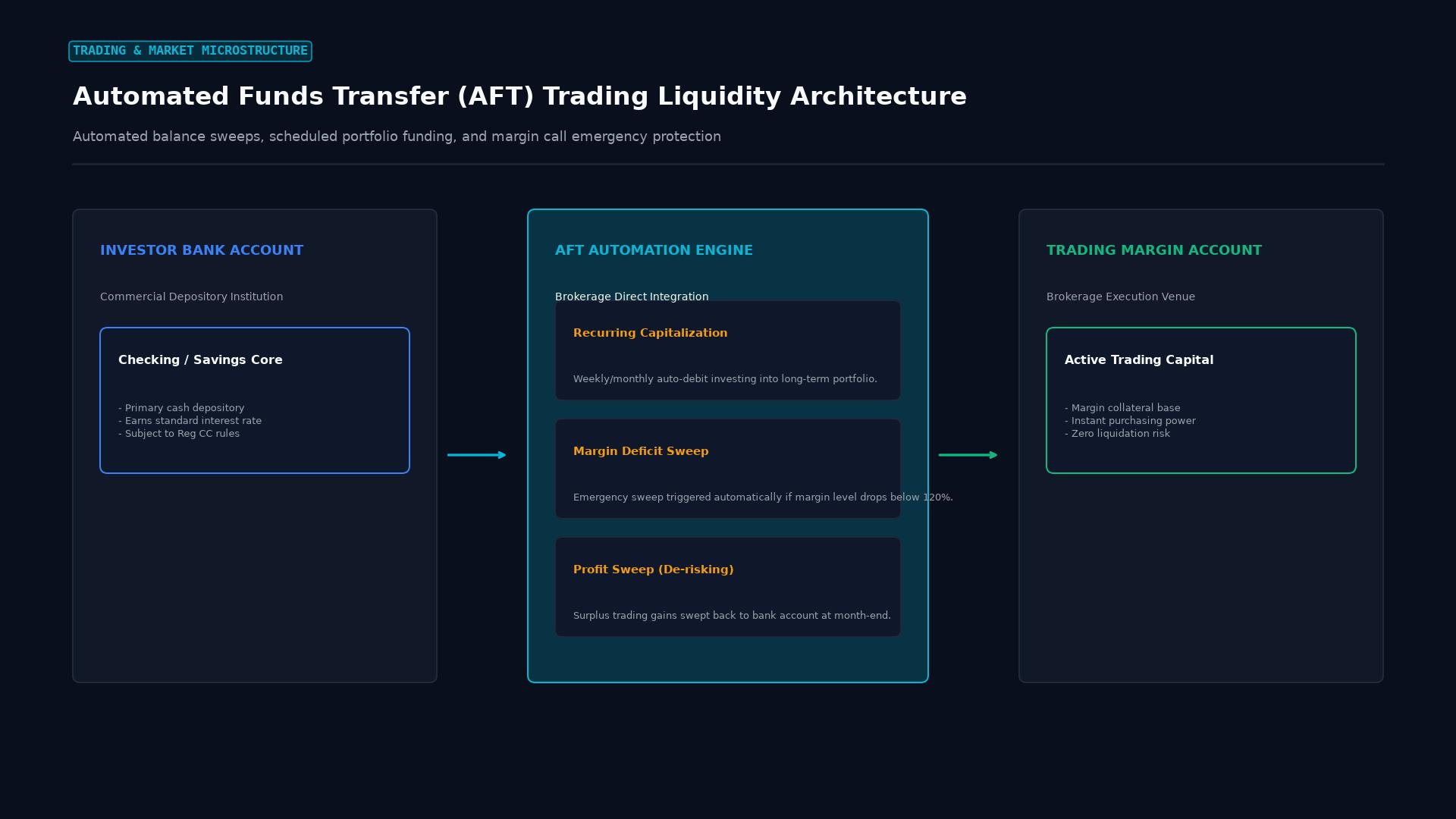 Figure: Automated banking sweep framework: scheduled recurring capitalization, emergency margin deficit sweeps, and end-of-month profit transfers between commercial banks and trading brokerages.
Market Microstructure: How AFT Operates
Unlike regular trading sessions that rely on centralized exchange crossing mechanisms and designated market makers (DMMs) who are legally obligated to maintain continuous two-sided liquidity quotes, after-hours trading operates entirely through Electronic Communication Networks (ECNs):
- Direct Limit Matching: ECNs (such as Archipelago, Instinet, and direct Nasdaq facilities) match buy and sell orders electronically. Trades execute only when an incoming limit order matches an existing limit order on the book at an identical price.
- Order Type Restrictions: Market orders are strictly prohibited in after-hours trading by retail brokerages and clearing firms. Because there are no designated market makers providing two-sided liquidity buffers, submitting a market order in a thin book could cause catastrophic slippage, executing hundreds of basis points away from fair value. Only limit orders are accepted.
- Order Routing Fragmentation: Orders placed on one brokerage’s internal ECN might not automatically interact with resting liquidity on a competing ECN unless the broker utilizes specialized multi-ECN smart order routing software.
ECN Order Matching in the After-Hours Session:
┌────────────────────────┐                  ┌────────────────────────┐
│ Institutional Seller   │                  │ Retail Buyer           │
│ Limit: $152.00 (1,000) │                  │ Limit: $152.00 (500)   │
└───────────┬────────────┘                  └───────────┬────────────┘
            │                                           │
            └─────────────────────┬─────────────────────┘
                                  ▼
                    ┌───────────────────────────┐
                    │      Electronic Book      │
                    │       (ECN Engine)        │
                    │ Matches 500 shares @ $152 │
                    └─────────────┬─────────────┘
                                  ▼
                    ┌───────────────────────────┐
                    │ Trade Cleared via DTCC    │
                    │ 500 shares remain on ask  │
                    └───────────────────────────┘
Microstructure Risks of After-Hours Trading
While AFT allows traders to react immediately to earnings releases, the session carries severe structural risks:
| Microstructure Risk | Underlying Cause | Impact on Trader Capital |
|---|---|---|
| Thin Liquidity | Institutional participation drops sharply | Large orders cannot execute without moving price |
| Wide Bid-Ask Spreads | Absence of designated market makers | Spreads widen from pennies to dollars, increasing friction |
| Extreme Volatility | Low order volume reacting to headlines | Erroneous panic prints and false breakout patterns |
| Unconsolidated Quotes | Fragmentation across separate ECN pools | Quotes on one platform may not reflect national best prices |
| Order Cancellation | Unfilled day orders expire at 4:00 PM | Requires explicit entry of extended-hours order flags |
Price Discovery and the Post-Earnings Phenomenon
The most common application of after-hours trading centers on corporate quarterly financial reports. Public corporations deliberately release their Form 10-Q and 10-K filings between 4:05 PM and 4:15 PM ET:
Post-Earnings Price Action Dynamic:
┌────────────────────────────────────────────────────────┐
│ 4:00 PM ET: Regular market closes at $100.00           │
└──────────────────────────┬─────────────────────────────┘
                           │
                           ▼
┌────────────────────────────────────────────────────────┐
│ 4:05 PM ET: Tech company reports 40% EPS beat          │
└──────────────────────────┬─────────────────────────────┘
                           │
                           ▼
┌────────────────────────────────────────────────────────┐
│ 4:06 PM – 4:30 PM ET: Algorithmic bots and hedge funds │
│ bid up shares in thin AFT session.                     │
│ Price surges to $118.00 (+18%).                        │
└──────────────────────────┬─────────────────────────────┘
                           │
                           ▼
┌────────────────────────────────────────────────────────┐
│ 9:30 AM ET Next Day: Market opens with an overnight    │
│ "gap up," setting the baseline for regular trading.    │
└────────────────────────────────────────────────────────┘
Traders who hold positions overnight are exposed to the full price volatility created during after-hours sessions without being able to execute stop-loss market orders to limit downside exposure.
Key Takeaways
- AFT stands for After-Hours Trading, taking place from 4:00 PM to 8:00 PM Eastern Time across electronic communication networks.
- The session is predominantly used to trade in response to quarterly earnings releases and corporate announcements published after the closing bell.
- Trading in AFT is restricted to limit orders due to the absence of designated market makers and the elevated risk of severe price slippage.
- Microstructure conditions in AFT are characterized by wide bid-ask spreads, low aggregate liquidity, and high price volatility.
Frequently Asked Questions
Can retail investors participate in after-hours trading?
Yes. Major retail brokerages provide after-hours trading access to individual clients. However, retail traders must typically sign an extended-hours trading risk disclosure agreement and must manually specify order routing flags indicating that the limit order is valid during the extended session.
What is the difference between AFT and pre-market trading?
Pre-market trading takes place in the morning before regular exchange opening (typically between 4:00 AM and 9:30 AM ET), whereas after-hours trading takes place in the evening following the closing bell (from 4:00 PM to 8:00 PM ET). Both sessions operate on ECNs using limit orders, but AFT typically experiences higher volume due to late-afternoon corporate earnings reports.
Do stop-loss orders work in after-hours trading?
Standard stop-loss market orders do not trigger or execute during after-hours trading because exchanges and brokers do not support market orders in extended sessions. Certain brokerages allow stop-limit orders during after-hours trading, but if the stock price gaps past the limit threshold, the order will remain unexecuted.
Ready to trade forex?
Open a free demo account with a regulated broker. Practice with virtual funds before risking real money.